

An A-line wedding dress usually gives you more room through the legs, while a mermaid wedding dress follows the hips and upper legs before flaring lower down. Choose between them by considering the outline you love and the movements your wedding requires. Neither silhouette is automatically more comfortable: the cut, fabric, size, and construction of the individual dress matter.
This comparison focuses on the practical choice: sitting through dinner, turning in a narrow aisle, climbing steps, and dancing. If you already know you want a wedding gown but feel torn between these two shapes, start with what you want to do in it.
Key takeaways
- A-line skirts widen gradually; mermaid skirts stay closer to the legs before the flare.
- Test the actual dress while sitting, walking, turning, and stepping up. Standing photos cannot show the whole fit.
- Venue surfaces, aisle width, and your plans for dancing can help you decide how much skirt and leg room you want.
- Silhouette names do not establish stretch, built-in support, lining, or whether a train can be bustled. Check the specific gown.
A-line vs. mermaid: what changes when you move?
An A-line dress has a skirt that gradually widens toward the hem, creating an outline like the letter A. A mermaid dress follows the body more closely through the hips and upper legs, then opens into a distinct flare. The position and size of that flare vary, so two mermaid gowns can feel quite different.
Mermaid and trumpet are related descriptions, but they are not exact synonyms. A trumpet silhouette generally begins to flare higher on the thigh, while a mermaid flare generally begins around the knee or lower. Retail naming varies; study the photographs and ask where the particular skirt starts to open.
| Consideration | A-line | Mermaid |
|---|---|---|
| Skirt shape | Widens gradually toward the hem. | Follows the hips and upper legs before a lower flare. |
| Stride | Often offers more space between the legs and skirt. | A close cut may shorten your stride; flare placement matters. |
| Sitting | Extra skirt fabric may need arranging around the chair. | Check how the fitted hip and thigh area behaves when seated. |
| Turning | A fuller skirt may sweep a wider area. | The lower flare or train can still spread well beyond your feet. |
| Overall volume | Ranges from softly flared to substantially full. | Ranges from a small flare to a dramatic, layered hem. |
| What to verify | Actual fullness, skirt weight, layers, and hem clearance. | Leg room, flare height, sitting room, and hem clearance. |
Treat the table as a starting point, not a verdict about every dress. A heavily layered A-line skirt can be harder to manage than a lightly constructed mermaid skirt. A roomy mermaid cut can also feel different from a tightly fitted version.
Start with the shape you want, without body-type rules
Both silhouettes can be chosen by brides across a wide range of sizes and proportions. You do not need a particular body shape to wear either one. The useful question is whether you like the outline and feel comfortable with how closely the dress follows your body.
If you prefer a skirt that falls away from the waist, start with an A-line. If you enjoy a closer line through the hips with a pronounced lower flare, start with a mermaid. Neckline, waist placement, seams, and skirt volume can change the overall effect within either category.
Compare front, side, and back views. A dress should feel like your choice, rather than a set of rules about what to emphasize or conceal. Browse A-line wedding dresses and mermaid wedding dresses with those preferences in mind.
Use a movement checklist before deciding
Try these checks in the shoes and undergarments you intend to wear, when available. If you are still shopping online, use the checklist to form questions about the gown. Photographs alone cannot confirm how it will behave on you.
Walk, turn, and take a step up
Walk forward at a natural pace, then turn in both directions. Notice whether the skirt lets you take a comfortable step or whether you must shuffle. With a mermaid dress, pay particular attention to the point where the fitted skirt opens; with an A-line, watch the amount of fabric moving around your feet.
Use a stable step with help nearby if needed, and check whether you can lift your foot comfortably without pulling against the skirt. Think about your actual route: a ceremony platform, entrance steps, or a staircase between photographs and dinner. Do not assume either silhouette removes the need to manage a hem.
Sit as you will at the reception
Sit in a chair, then stand again. Check the waist, hips, and upper legs for uncomfortable pressure, pulling, or a need to keep readjusting. Your seated fit matters as much as the standing outline.
An A-line skirt may need space beside and behind the chair. In a mermaid dress, check whether you can bend and sit comfortably without the skirt riding into an awkward position. Leave room for normal breathing and movement; a closer silhouette should not require painful tightness.
Rehearse the moments you care about
Try a small dance step, reach for an imaginary partner, and turn as you would for a photograph. If a long first dance or lots of dancing is central to your evening, give those movements extra weight. If your plans are quieter, sitting comfortably and navigating your venue may matter more.
Ask about bodice support, lining, and fabric stretch for the particular gown. Do not infer those details from the silhouette name or a smooth-looking photograph.
Match the skirt to your venue's routes
A setting does not dictate a silhouette, but it does give you practical questions. Look beyond the ceremony backdrop and picture the whole route: getting ready, arriving, walking the aisle, taking photographs, and reaching your seat.
- Gardens and lawns: consider uneven ground, soft surfaces, and whether you can keep the hem clear while walking. Either silhouette needs attention here.
- Beach or sandy areas: check skirt weight, trailing fabric, and how you will move between surfaces. A silhouette label does not establish breathability or suitability for warm weather.
- Stairs and raised ceremony spaces: think about step height, handrails, and who can help arrange the skirt or train.
- Narrow aisles and close seating: consider the skirt's widest point, room to turn, and the space around your chair. A fitted upper skirt can still have a very wide flare.
For either shape, photos of the dress from behind and in motion can help you judge the space it occupies. When possible, compare the gown's measurements and construction with the physical spaces you will use.
Separate the silhouette from the petticoat and train
A silhouette describes the outline. A petticoat or other underskirt can influence volume, and a train extends fabric behind you. They affect movement in different ways, so consider them separately.
Do not assume every A-line dress needs a petticoat or that every mermaid dress includes one. Some gowns have enough structure in their own layers; others may be shown with additional support. Ask what is included and whether an underskirt is intended for that design.
Likewise, either silhouette may have a train or a shorter hem. A bustle is a way of securing a train for easier movement, but suitability depends on the dress's construction. Ask about options for the specific gown rather than assuming a train can be bustled. Plan to check the final hem with your wedding shoes.
Compare actual gowns, then discuss adjustments
Once you know which movements and venue features matter most, compare individual dresses using the same checklist. Keep notes on flare placement, skirt volume, train length, and the questions still unanswered. You can explore the wider wedding dress collection if your preferences shift during the comparison.
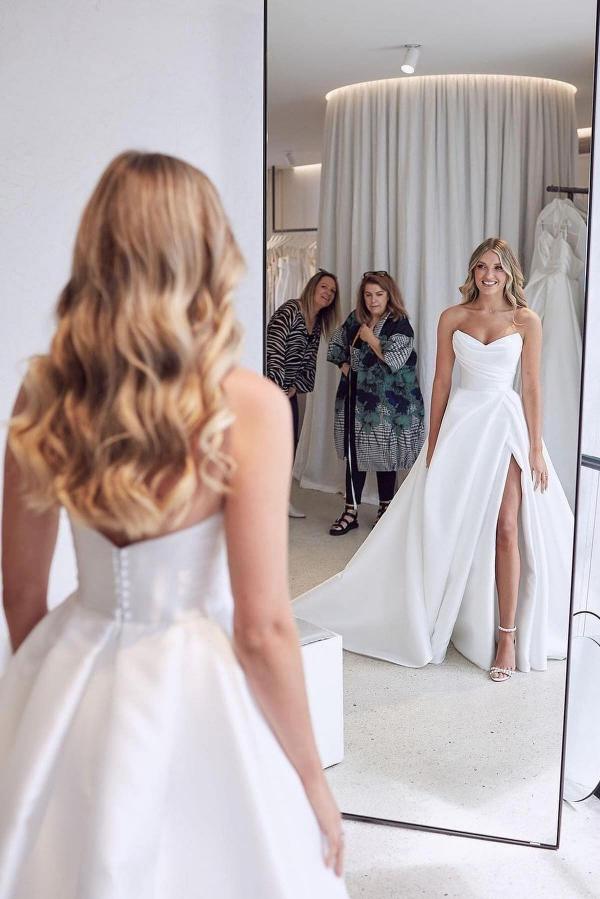
Satin A-Line Wedding Dress with Side Slit
This satin A-line design pairs ruffles and a side slit with a chapel train, making it useful for comparing skirt opening and trailing fabric.
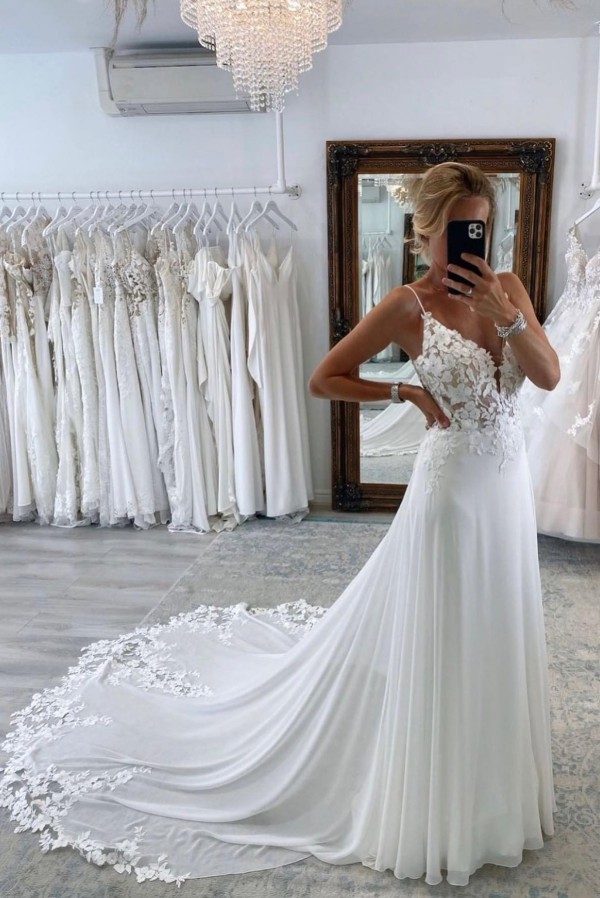
Floral Lace A-Line Wedding Dress with Spaghetti Straps
Floral lace appliques and spaghetti straps offer an A-line reference for comparing a gradually widening skirt with the mermaid examples.
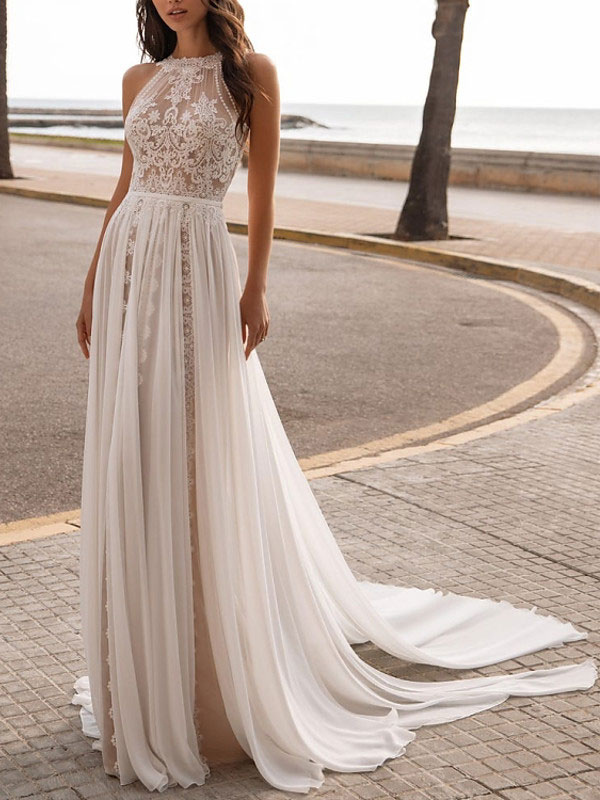
Ivory A-Line Wedding Dress with Court Train
The illusion neckline and court train show how a gradually flared skirt can still include fabric to manage behind you.
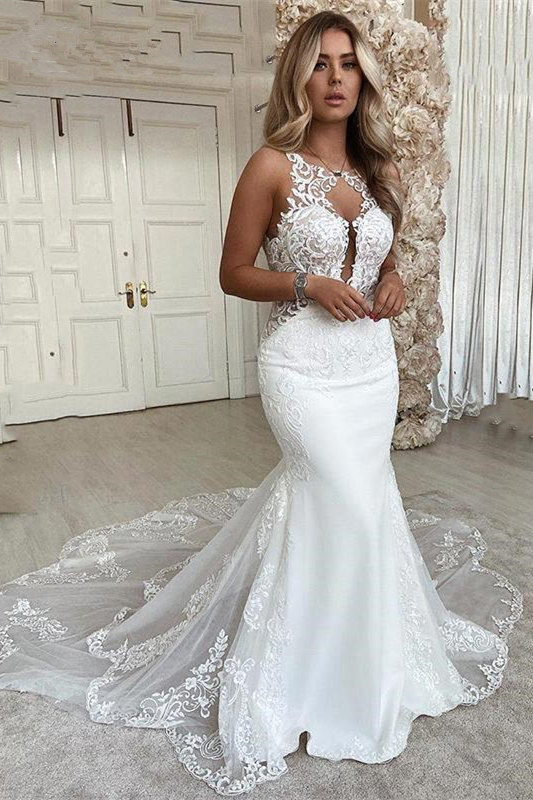
Sleeveless Lace Mermaid Wedding Dress
Compare the fitted hip line and lower flare, then consider how the train changes turning and walking.
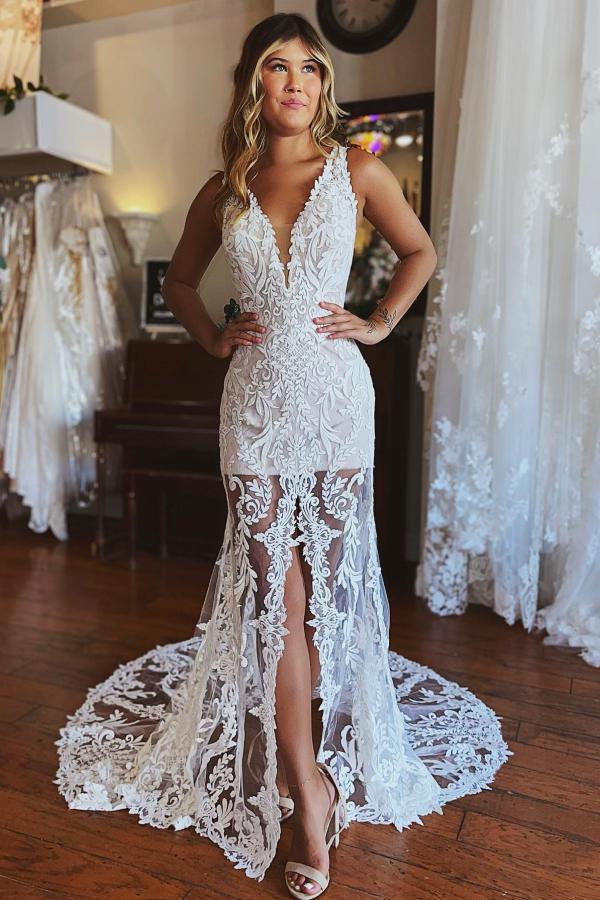
V-Neck Lace Mermaid Wedding Dress with Front Split
A front split adds another design variable to this lace mermaid gown; ask how the specific cut affects seated fit and stride.
Newarrivaldress offers custom sizing, custom colors, custom styles, design modifications, and dresses made from reference images. Contact customer service to discuss your measurements, preferred shape, and the changes you have in mind.
Describe the practical goal as well as the appearance: more room for sitting, a different flare position, or less skirt volume, for example. Ask what is feasible for the design. A reference image helps communicate an idea, but it should not be treated as a promise of an exact copy or a particular fit.
Frequently asked questions
Is an A-line wedding dress easier to walk in than a mermaid?
An A-line skirt often leaves more room around the legs, but actual ease of movement depends on the gown's cut, layers, weight, and hem. Test a natural stride, a turn, and a step up before deciding.
Are mermaid and trumpet wedding dresses the same?
They are related fitted silhouettes, but trumpet skirts generally flare higher on the thigh and mermaid skirts generally flare around the knee or lower. Naming varies, so confirm the flare position on the actual dress.
Can I sit comfortably in a mermaid wedding dress?
You may be able to, but the specific cut and fit determine how much room you have through the hips and thighs. Sit and stand in the dress, and check for pulling or uncomfortable pressure rather than judging by a standing photograph.
Do A-line wedding dresses need a petticoat?
Some designs use their own layers for volume, while others may be intended to work with an underskirt. Ask what is included and recommended for the gown before adding one.
Can either silhouette have a train?
Yes, the silhouette and train are separate design choices. If you want to secure the train for the reception, ask whether a bustle is suitable for that particular gown.
Choose the outline you enjoy, then let real movements and venue details refine the decision. The right comparison is between the dresses you are considering and the wedding you plan to have.
About the Author
Sarah is a bridal fashion enthusiast focusing on wedding gowns and formal evening dresses. She devotes herself to studying dress cuts, lace craftsmanship and fitting advice. Through her blog, she delivers curated inspiration and practical styling ideas for your big moment.