

Start checking a long-sleeve prom dress at the shoulders, then work down through the upper arms, elbows, and wrists. The sleeves should feel comfortable during the movements you expect at prom, and those movements should not make the bodice pull or the neckline shift enough to need repeated adjustment. A good standing photo is only the first part of the check.
Long sleeves can be fitted, loose, sheer, or decorated, and each design moves differently. Judge the individual dress rather than assuming that a certain fabric name, sleeve shape, or size will guarantee comfort. Use this guide when comparing product details and again when trying on your dress.
- Check shoulder placement before judging the sleeve length.
- Bend your elbows and reach forward without forcing the fabric.
- Notice how the armhole and bodice move together.
- Test the dress seated as well as standing.
- Repeat key movements with your planned shoes and accessories.
Read the sleeve as part of the whole dress
A sleeve attaches to a bodice, so a sleeve problem may start somewhere else. If raising your arm lifts the entire dress, or reaching forward pulls across your back, do not assume that adding sleeve length will resolve it. The shoulder, armhole, bodice, and sleeve shape need to work together.
Begin by standing with your arms relaxed. If the design has a shoulder seam, see where it is intended to sit. Some styles have dropped shoulders or other deliberate construction, so use the product images and description to understand the design instead of imposing one seam position on every dress.
Then check the upper arm. Look for pressure, digging decoration, or fabric that feels strained when you bend. Extra fabric is not automatically a problem, especially with a loose sleeve, but it should not interfere with your hands or require constant rearranging.
Finally, inspect the cuff or wrist opening. A close cuff should feel comfortable when you move your hand, and any fastening should work as intended. A loose cuff needs a different check: does it fall across your hand, catch on jewelry, or get in the way when you sit at a table?
Try five movements before you decide
Use a mirror and, if helpful, ask a parent or friend to observe the back while you move. Keep the area clear and do not force a movement that feels restricted. You are identifying how the dress behaves, not trying to stretch it into fitting.
| Movement | Watch for | What to note |
|---|---|---|
| Reach both hands forward | Pulling across the upper back or shoulders. | Whether the bodice stays comfortable without holding an unusual posture. |
| Bend each elbow | Pressure at the elbow or upper arm. | Whether bending changes the cuff position or strains decoration. |
| Raise your arms comfortably | The armhole pressing or the neckline shifting. | How much adjustment is needed after you lower your arms. |
| Sit and stand | Changes in waist pressure and sleeve position. | Whether your arms can rest naturally while seated. |
| Make gentle dance movements | Catching, rubbing, or repeated pulling. | Whether the complete outfit supports the way you expect to move. |
1. Reach forward as if greeting a friend
Bring your hands forward naturally, then let them return to your sides. Check the shoulders and upper back. If you have to round your body unusually or stop early because the fabric feels tight, make a note of where the restriction starts.
Try one arm at a time, too. A dress may appear fine with both arms resting but feel different when you reach across your body. Notice whether the neckline returns to place or needs your help after each movement.
2. Bend your elbows in an everyday position
Bring a hand toward your shoulder, then hold your arms as you might while carrying a small bag or sitting at dinner. Check the inside of the elbow, upper arm, and wrist. Decoration, seams, and a fitted cuff can affect the sensation in different ways.
Do not judge the sleeve only with your arm straight. It needs to accommodate the bent positions you expect to use, even when the design is intentionally close-fitting.
3. Raise and lower your arms
Lift your arms to a comfortable height you might use while dancing. Watch the armholes, waist, and neckline together. Some movement in the garment is expected, but repeated tugging afterward is useful evidence that the design or fit needs another look.
Lower your arms and relax. If the dress stays displaced, check whether the sleeve is catching on your arm, a cuff is pulling, or the bodice itself is moving.
4. Sit as you would during the evening
Use a stable chair and sit normally, then rest your hands in your lap and on a table if one is available. Check that you can bend your elbows and reach forward comfortably. A sleeve that seems unobtrusive while standing may rest differently against a chair or tabletop.
Stand again without pulling on the fabric for support. Notice whether you need to rearrange the sleeves and bodice before taking a step.
5. Try your own version of dancing
You do not need a choreographed routine. Take a few small steps, turn carefully, and move your arms as you actually expect to at prom. Avoid testing on slippery flooring or near anything the skirt could catch.
Check the whole outfit during this step, including the hem, shoes, bag, and jewelry. If you are spending the entire time managing a sleeve or holding your arms away from the dress, that is worth resolving before choosing it.
Let the fabric and sleeve shape guide your questions
A fitted sleeve and a loose sleeve should not be assessed in exactly the same way. With a fitted design, focus on pressure and the ability to bend. With a loose design, check the volume around your hands, your place at a table, and anything you might brush past.
Sheer sleeves describe coverage rather than warmth or stretch. Check the individual material and construction details; do not assume that a sheer sleeve is flexible or that an opaque sleeve is restrictive. The same principle applies to lace and other decorative surfaces.
If the sleeve has sequins, beads, or textured decoration, move your arm alongside your body and check for rubbing or catching. Examine openings and fastenings carefully without pulling on decoration. When the product description does not answer a specific construction question, ask customer service before making your choice.
Do not rely on a general size label alone. Compare the product's sizing information and ask which measurements are needed if sleeves are a particular concern. The right question is where the fit needs attention, rather than simply whether you should choose a larger size.
Check coverage, accessories, and the final silhouette
Make sure the sleeve length shown is the length you want. A short sleeve or a three-quarter sleeve is a different design from a long sleeve, even if the dress has substantial arm coverage. Read the description and inspect the images rather than relying only on a collection label.
Review your school's dress requirements for the full design, including the neckline and back. Long sleeves alone do not establish whether a dress meets those requirements, and sheer sections may need separate consideration.
Try bracelets, a watch if you plan to wear one, and your bag with the dress. Check that the cuff closes comfortably and jewelry does not catch. If the sleeves are a prominent detail, view the whole outfit before adding more accessories around them.
Compare long-sleeve prom dress designs
Look through the styles below with your movement checklist in mind. Open the individual product pages to inspect the selected options, or browse more long-sleeve prom dresses and the full prom dress collection.
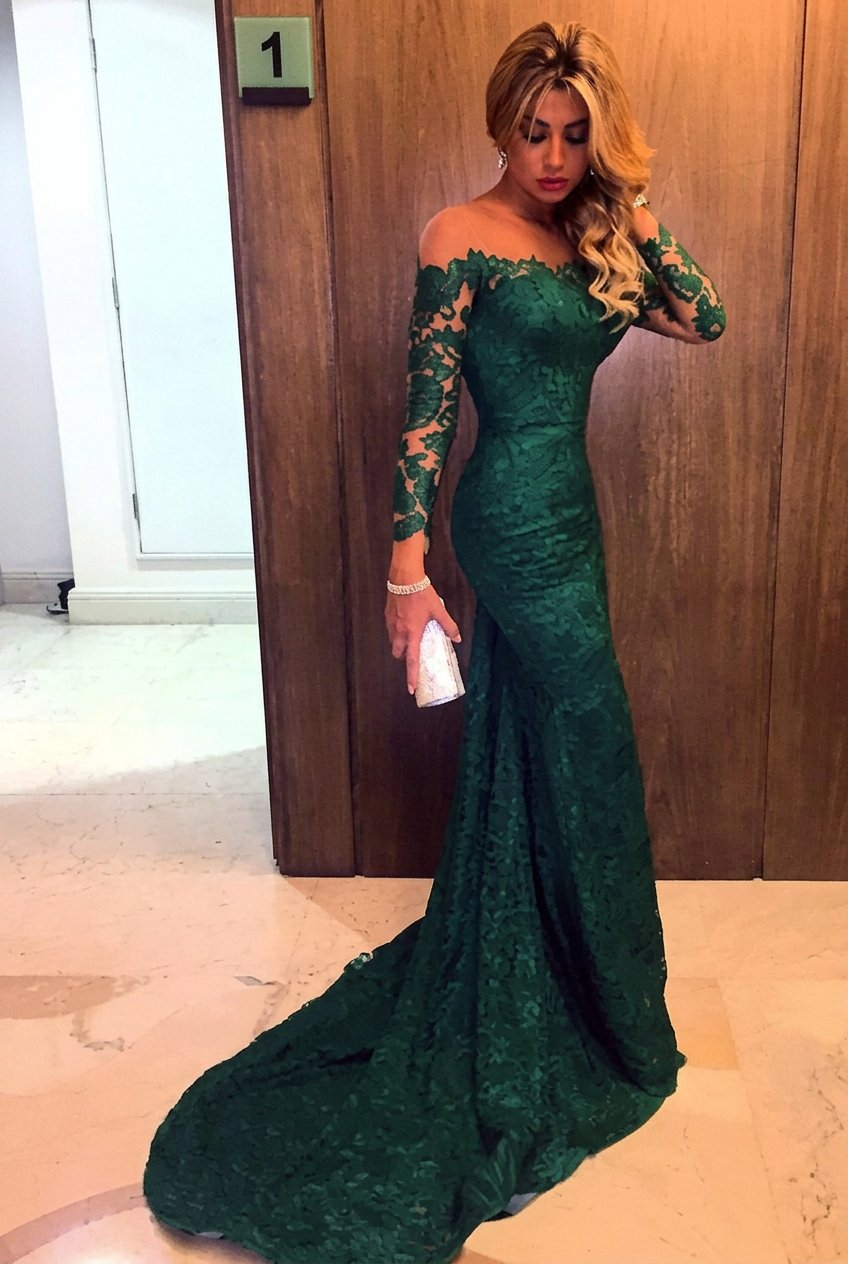
Dark Green Long-Sleeve Lace Mermaid Dress
Use the lace sleeves as a starting point for questions about lining, upper-arm fit, and movement.

High-Neck Long-Sleeve Sequin Mermaid Dress
Compare the high neckline and long sleeves when checking shoulder and arm comfort together.

V-Neck Long-Sleeve Sequin Mermaid Dress
Compare the V-neckline and long sleeves while checking how reaching affects the bodice.

Pink Off-the-Shoulder Long-Sleeve Prom Dress
An off-the-shoulder neckline is a useful reminder to test sleeve position while reaching and turning.

Green Long-Sleeve Satin Mermaid Dress
Compare the looser sleeve shape with the fitted lace and sequin designs, especially at the elbow and wrist.
Bring specific fit questions to customer service
Newarrivaldress supports custom sizing, custom colors, custom styles, design modifications, and dresses made from reference images. If you want to discuss a sleeve or another design detail, contact customer service with the product link and a clear description of your request.
Explain whether your concern is length, upper-arm fit, wrist opening, coverage, or movement. Ask what information the team needs and discuss the proposed design before assuming a change will work. A reference image can help show your preference, while the practical details still need to be agreed.
Frequently asked questions
Should long sleeves feel tight with my arms straight?
A close-fitting design may sit near the arm, but it should not feel painfully tight or strained. Check it again with bent elbows and a forward reach, because a straight-arm view does not show how the sleeve handles movement.
What does it mean if raising my arm lifts the bodice?
The sleeve, armhole, shoulder, and bodice interact, so the cause may involve more than sleeve length. Note exactly where the pulling begins and discuss that information when seeking fit advice.
Are sheer sleeves always stretchy?
No. Sheerness does not establish stretch, softness, or warmth. Check the specific fabric information and ask about details that are not provided.
How can I check long sleeves when shopping online?
Inspect the full-length and close-up images, read the construction and sizing details, and identify questions about the shoulder, elbow, cuff, or decoration. A product photo cannot replace a movement check, but specific information can help you make a more informed choice.
Should I size up if a sleeve feels restrictive?
Do not assume that a larger size will solve the issue, because it may also change the bodice fit. Identify the restricted area and compare the dress's sizing information or ask customer service which measurements and design details need review.
About the Author
Sarah is a bridal fashion enthusiast focusing on wedding gowns and formal evening dresses. She devotes herself to studying dress cuts, lace craftsmanship and fitting advice. Through her blog, she delivers curated inspiration and practical styling ideas for your big moment.