
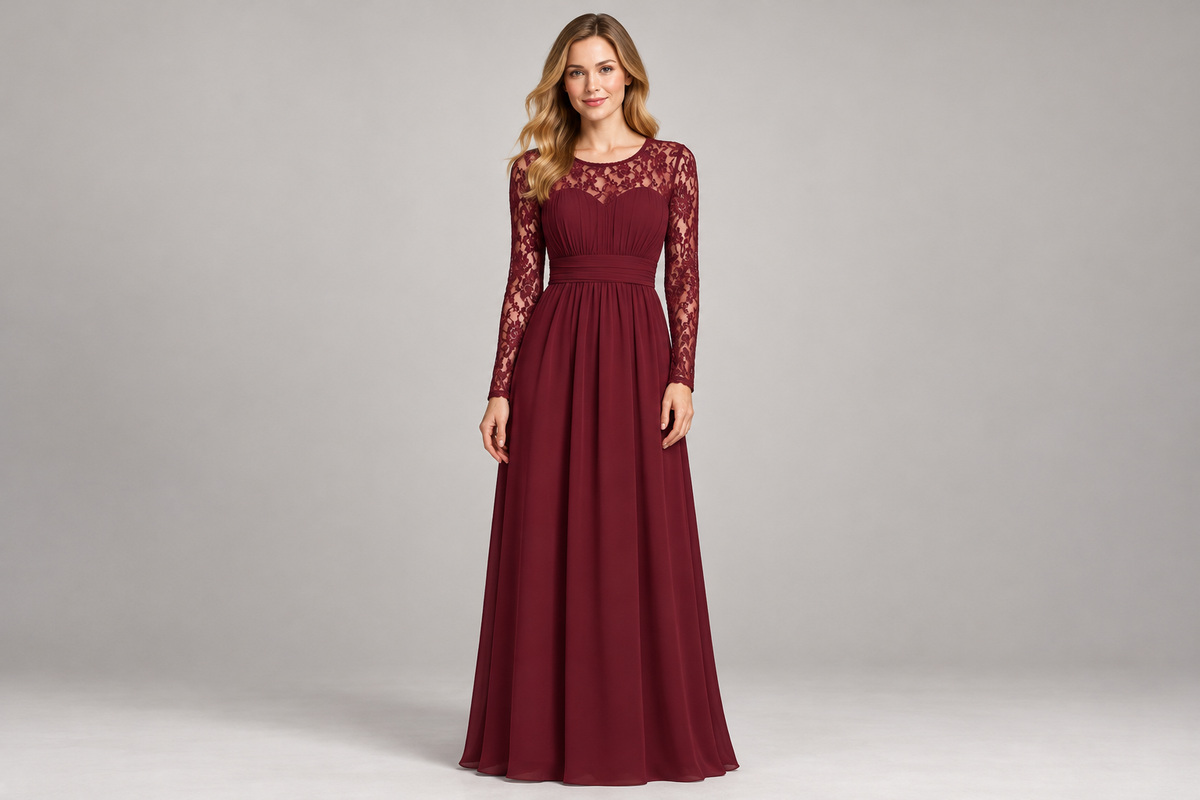
Choose a long-sleeve winter wedding guest dress by starting with the invitation's dress code, then checking the sleeve construction, venue, and fit. A lined sleeve can offer more coverage than sheer lace or mesh, but long sleeves alone do not guarantee warmth. Plan the dress and your outer layer together so you feel comfortable between the ceremony, dinner, and dancing.
- Match the wedding's requested level of formality before choosing a length or embellishment.
- Check whether the sleeves and bodice are lined; a dark photograph can hide transparent fabric.
- Test reaching, sitting, and bending so the sleeves do not pull the neckline or shoulders.
- Bring a suitable coat or wrap for travel and any outdoor portions of the celebration.
Start with the invitation and the wedding setting
Winter describes the season, not the dress code. A December courthouse ceremony, an afternoon restaurant reception, and an evening ballroom wedding can call for different outfits. Read the invitation and wedding website for the requested attire, location, and any special guidance.
Let the dress code set the direction
For black tie, a floor-length evening dress is a useful starting point. Look for a silhouette and finish that feel formal enough for the setting. For formal or black-tie optional attire, consider a floor-length gown or a polished dressier alternative that fits the couple's guidance.
For cocktail attire, a refined knee-length, midi, or otherwise appropriately dressy style may work. Sleeves do not make a simple daytime dress formal by themselves; consider the fabric, cut, and overall styling together. If the wording is unclear, ask the hosts or someone helping coordinate the wedding before making your choice.
Picture the whole day
Check whether the ceremony and reception share a location. A short walk between buildings, outdoor photographs, or a terrace ceremony can change your layering plan. An indoor venue may also become warm once guests fill the room, so an outfit that lets you remove your coat is often more adaptable than relying on a very heavy dress.
Compare sleeve coverage and fabric construction
Look closely at both product photographs and descriptions. The fabric used for the skirt may differ from the fabric used for the sleeves, and a lined bodice does not mean the arms are lined. If that detail matters to you, ask customer service to confirm it for the specific dress.
| Sleeve construction | What to expect | What to check |
|---|---|---|
| Sheer lace or mesh | Visual detail with some skin visible | Transparency, seam placement, texture against the skin, and room at the elbow |
| Opaque, unlined fabric | More visual coverage, with warmth depending on the fabric | Thickness, stretch, and whether light passes through it |
| Lined sleeves | An additional fabric layer that may improve opacity and warmth | How both layers move together and whether the lining restricts bending |
| Loose or flared sleeves | More space around the arm and a distinctive shape | Whether cuffs reach table settings or catch under a coat |
Fabric names are only a starting point. Satin describes a weave and surface appearance; it does not promise a heavy, warm fabric. Velvet can feel substantial, but its weight and stretch vary. Lace may be delicate and open or backed by another layer. Assess the actual construction instead of treating a material name as a winter guarantee.
Check the fit from shoulder to wrist
A long-sleeve dress has more fit points than a sleeveless one. A bodice can look right while the upper arms feel tight or the sleeve head pulls across the shoulders. Compare your current measurements with the size information for the dress rather than choosing solely by your usual clothing size.
When trying on a dress, use the undergarments and shoes you intend to wear. Fasten every closure before assessing fit. A partially zipped dress cannot show how the finished neckline, back, and sleeves will sit.
- Reach forward: Give an imaginary hug. Check for uncomfortable tension across the back or upper arms.
- Bend your elbows: Hold your arms as you would while eating or carrying a small bag. Notice tightness at the elbow and cuffs.
- Lift your arms gently: See whether the waist and neckline shift substantially, then whether they settle back.
- Sit down: Check the waist, hips, sleeve comfort, and skirt position without holding the fabric in place.
- Walk and turn: Take ordinary steps, use a step if one is available, and try a few gentle dance movements.
If you are choosing between sizes, identify the area that is limiting movement. Do not assume every part of the dress stretches or that a sleeve can easily be enlarged. Ask about the specific style before planning an alteration.
Choose a length that works with the venue and shoes
A full-length skirt can suit a formal wedding beautifully, but it still needs to let you walk confidently. Check the hem with your intended heel height and pay attention to steps, carpet, and any uneven route between venues. A hem that drags can collect moisture and become difficult to manage.
A midi length may be convenient for some cocktail weddings, provided the overall outfit meets the dress code. Look at where the hem falls when you sit, and try the dress with the shoes you can comfortably wear through the event. An elegant outfit is easier to enjoy when you are not continually lifting the skirt or adjusting your balance.
Pick a color with the couple and setting in mind
Deep blue, green, burgundy, and other rich shades can be appealing winter options, but there is no required winter palette. Choose a color you enjoy that works with the event and any guidance from the couple. Consider how prominent sequins, metallic finishes, or large embellishments will feel in the setting.
Avoid white, ivory, cream, and white-based designs that could look bridal unless the couple explicitly requests them. Color names can be ambiguous, so consider the overall appearance rather than relying on a label such as champagne. If an outfit is close to bridal white, choosing another shade is a straightforward way to remove the uncertainty.
Build the outer layer into your outfit
Try your coat or wrap over the dress before the event. A narrow coat sleeve may compress a puffed sleeve, while a textured or embellished cuff may catch on a lining. Check that you can fasten the outer layer comfortably and carry your bag without pulling the dress.
For an outdoor portion, consider the actual conditions and ground surface when selecting footwear and layers. A decorative wrap may add little warmth. You can keep the outfit cohesive with a simple coat and a scarf that is easy to remove once inside; matching every fabric or color is unnecessary.
Browse wedding guest dresses with these checks in mind, or explore evening dresses when the invitation calls for a more formal look. For each option below, compare the neckline, sleeve shape, and skirt to your own event needs.

Black Lace Long-Sleeve V-Neck Gown
Black lace long sleeves and a V-neck create a dressy option; the sheer sleeves still call for a separate warmth plan.

Purple Long-Sleeve Satin Evening Dress
Compare the draped sleeves and applique detail with the silhouette and formality requested for the wedding.

Dark Green Long-Sleeve Lace A-Line Dress
Dark green lace and long sleeves offer a rich-color direction; confirm sleeve opacity rather than assuming lace provides insulation.
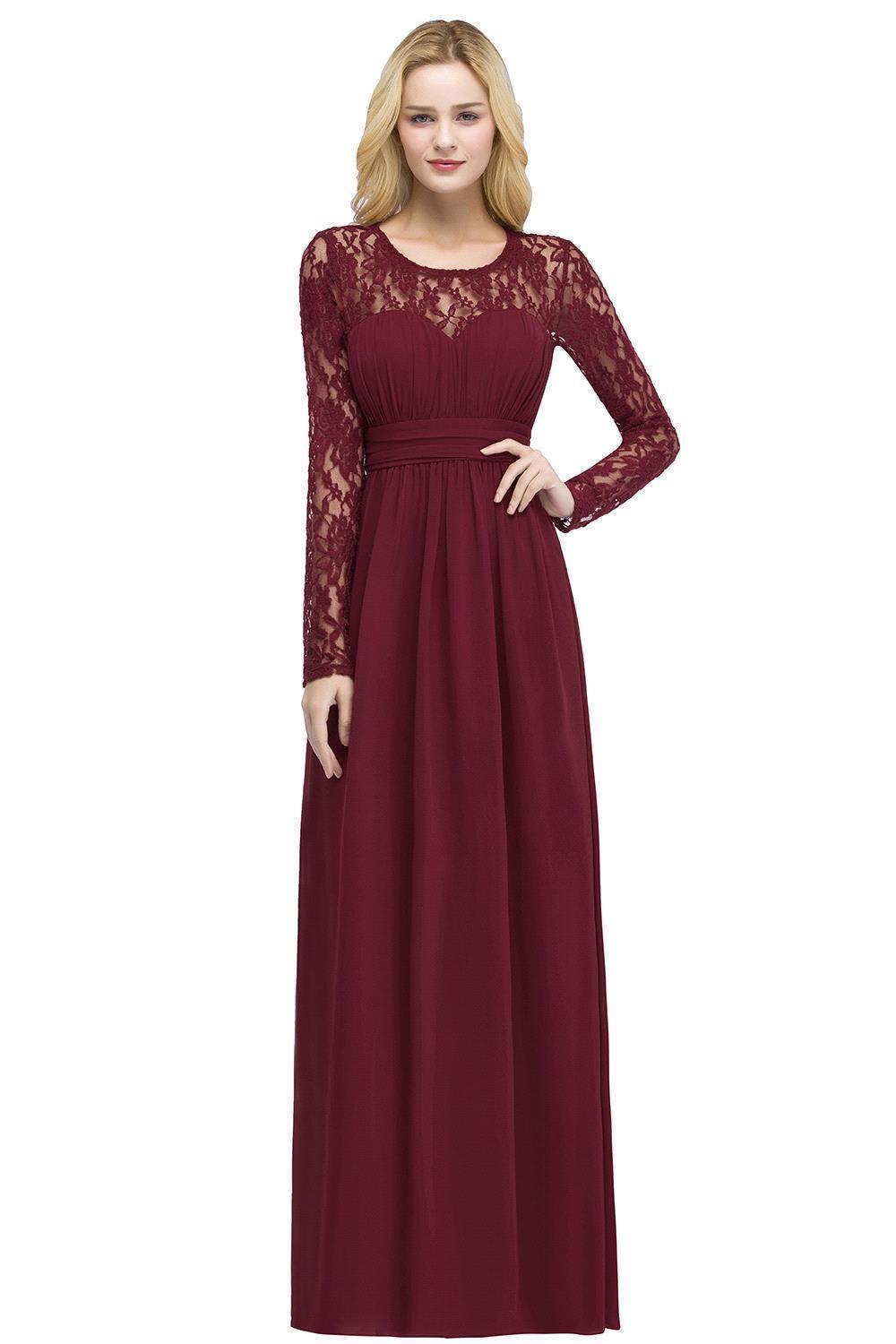
Long-Sleeve Lace and Chiffon A-Line Dress
A jewel neckline and long sleeves give this floor-length A-line dress another shape to compare; check its lace panels and lace-up back against your preferences.

Dark Green Long-Sleeve Sequin Evening Dress
Compare the sequined surface and side slit when planning a formal evening wedding look.
Discuss specific fit or design needs before choosing
Newarrivaldress supports custom sizing, custom colors, custom styles, design modifications, and dresses made from reference images. If you want to discuss a different sleeve, more coverage, or another design idea, contact customer service with the dress link and a clear description of your request.
Explain what you want to change and why: for example, more room at the upper arm or an opaque sleeve instead of a sheer one. Ask which details can be adapted for the style you are considering. A specific conversation is more useful than assuming that every pictured design can be changed in the same way.
Frequently asked questions
Are long-sleeve dresses warm enough for a winter wedding?
It depends on the fabric, lining, weather, and time spent outside. Sheer lace or mesh sleeves may add very little warmth, so plan an outer layer for travel and outdoor parts of the day.
Can I wear a long-sleeve midi dress to a winter wedding?
A dressy midi can work for some cocktail weddings, depending on the invitation and setting. For black tie, start with a floor-length option and follow any guidance the couple provides.
How can I tell whether lace sleeves provide coverage?
Check close-up photographs and the description for a sleeve lining rather than assuming the bodice lining continues down the arms. Ask customer service to confirm opacity if the available information is unclear.
What is the most useful movement check for long sleeves?
Reach forward and bend your elbows, then sit with your arms positioned as if you were eating. Watch for pulling across the shoulders, tightness at the upper arms, or a neckline that shifts uncomfortably.
Can I request changes to the sleeve design?
Newarrivaldress supports design modifications and custom styles. Contact customer service with the dress link, your measurements where relevant, and the sleeve change you would like to discuss.
About the Author
Sarah is a bridal fashion enthusiast focusing on wedding gowns and formal evening dresses. She devotes herself to studying dress cuts, lace craftsmanship and fitting advice. Through her blog, she delivers curated inspiration and practical styling ideas for your big moment.